Finding my first queen ant - Formica subsericea
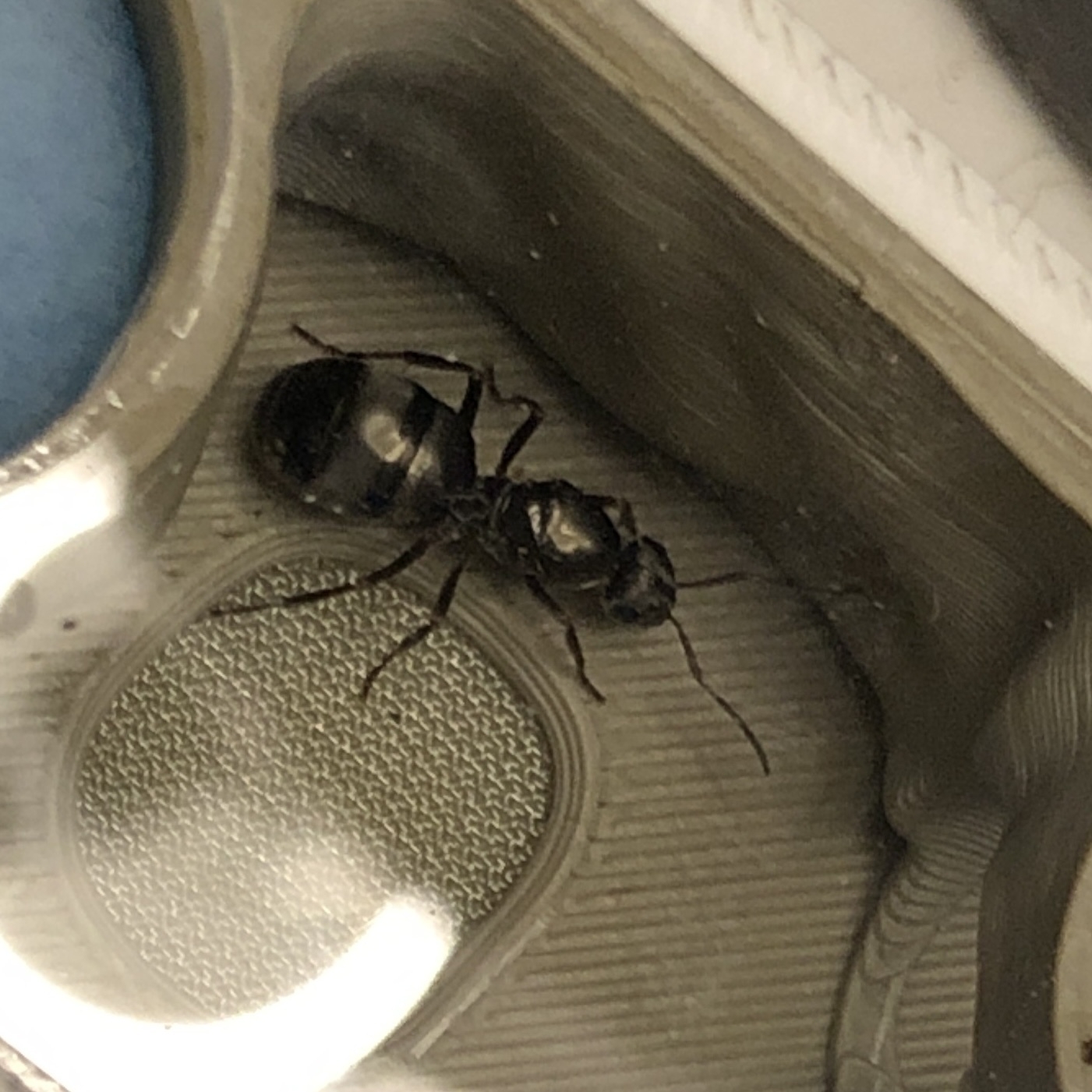
On August 30, 2024, at around 10:00 AM, I finally found my first queen ant, a Formica subsericea. She was tucked away in her founding chamber beneath a sedimentary rock in my backyard - an area I’ve admittedly let run a little wild, which turns out to be ideal for all sorts of critters. The weather had been pretty typical for late summer here: heavy rain the day before and light showers that morning. Despite the damp, the sun was practically blinding me when I found her, with the temperature hovering around 19°C.
Ant species like Formica often start their nuptial flights right after rainstorms, when the ground is humid, and the winds are calm. This creates the perfect conditions for queens to disperse and establish new colonies. It’s likely that my new queen, who I’ve named Owl (don’t ask why, it just felt right), was freshly mated and settling into her new role when I found her.
Owl is a fully claustral queen, meaning she doesn’t require external feeding while founding her colony. Her first nanitics will hatch from the stored energy in her body, a fascinating adaptation that allows her to remain sealed in her founding chamber without the need to forage - a strategy that offers her some protection from predators.
As of right now, she hasn’t laid any eggs, but I’ve placed her in a classic test tube setup. (The founding formicarium in the photo was just for better image quality.) I’ll be maintaining the temperature between 21°C and 25°C during her active phase, but for now I’m cooling her down to between 4°C and 6°C for diapause. I initiated this process on August 31st by moving her to my refrigerator. I realize this might seem a bit early for some, but I wanted to give her a controlled environment, and this early start should hopefully help her adjust. If all goes well, I plan to remove her from diapause on December 11, 2024.
From the research I’ve done on ant keeping, I know the success of the first generation of workers can make or break a founding queen. This being my first attempt, I’m being cautiously optimistic. Owl seems like she’s in good health, but there’s always that anxiety of whether she’ll survive the artificial winter.
For temperate species like Formica subsericea, diapause is crucial for survival. It’s more than just hibernation; it’s a metabolic slowdown that ensures the queen conserves energy and doesn’t burn through her resources before her workers can support her. In nature, Formica queens burrow deep to avoid the freezing surface temperatures of winter, and it’s our job to replicate that safely in captivity. Most of us aim for a diapause range between 3°C and 10°C, careful to avoid freezing but low enough to simulate the natural cooling they’d experience in the wild.
In Owl’s case, I’ve opted for the lower end of the spectrum, cooling her to about 4°C. While this might seem a bit conservative, especially for those of us in colder climates like Canada, it’s all about striking the right balance. A gradual cool-down helps avoid shocking the queen’s system, and I’ll be monitoring her closely throughout.
Starting diapause early gives me a bit more control over her environment, and while it might be earlier than outdoor conditions would dictate, it also provides a slight head start for the colony when she wakes up. As many keepers know, success in diapause can dramatically affect colony health in the following year. It’s all about finding that sweet spot between artificial intervention and what’s best for the ants… I hope I can do right by Owl, and keep her healthy for years to come.